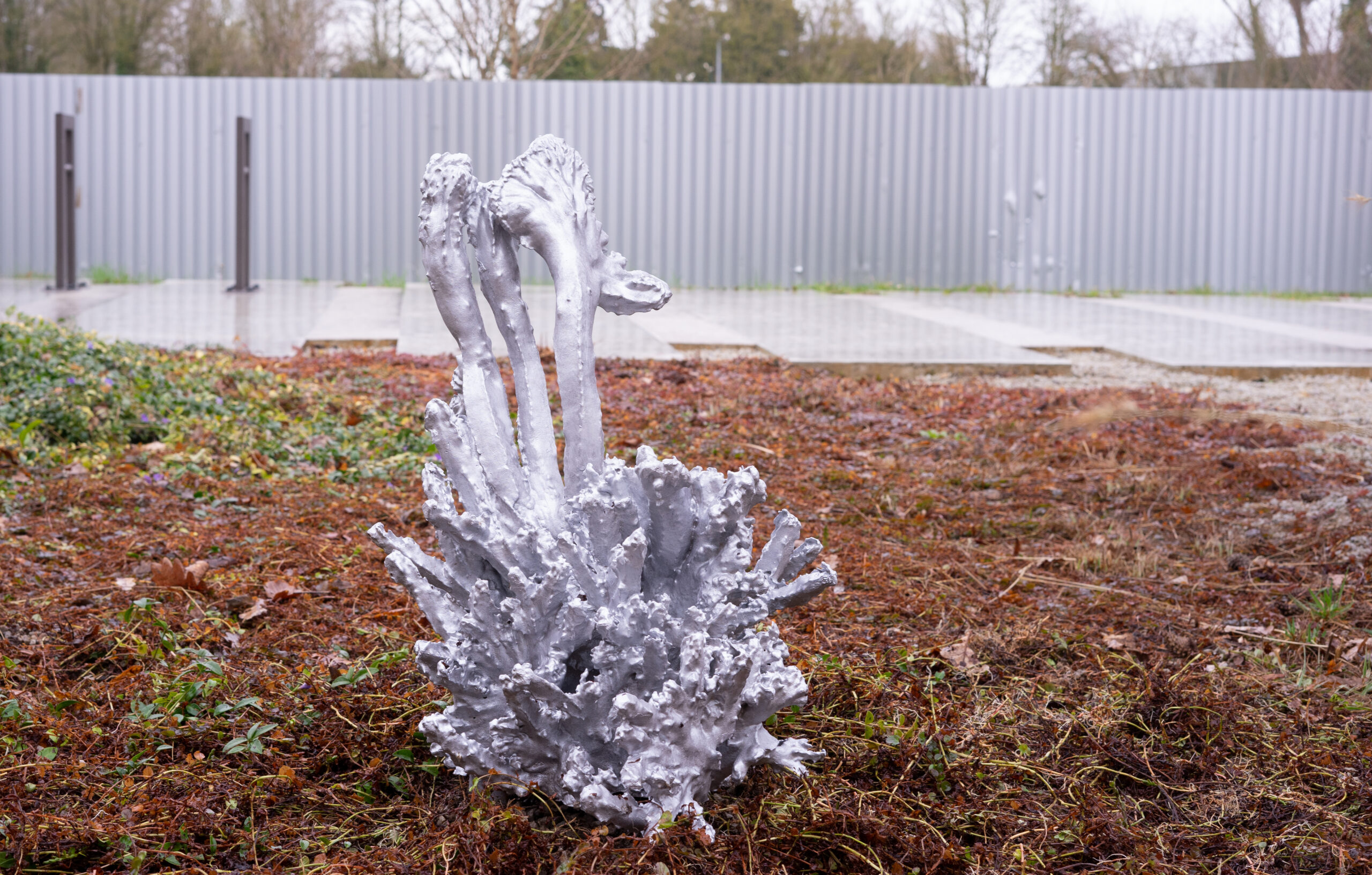
Le jardin polygonal
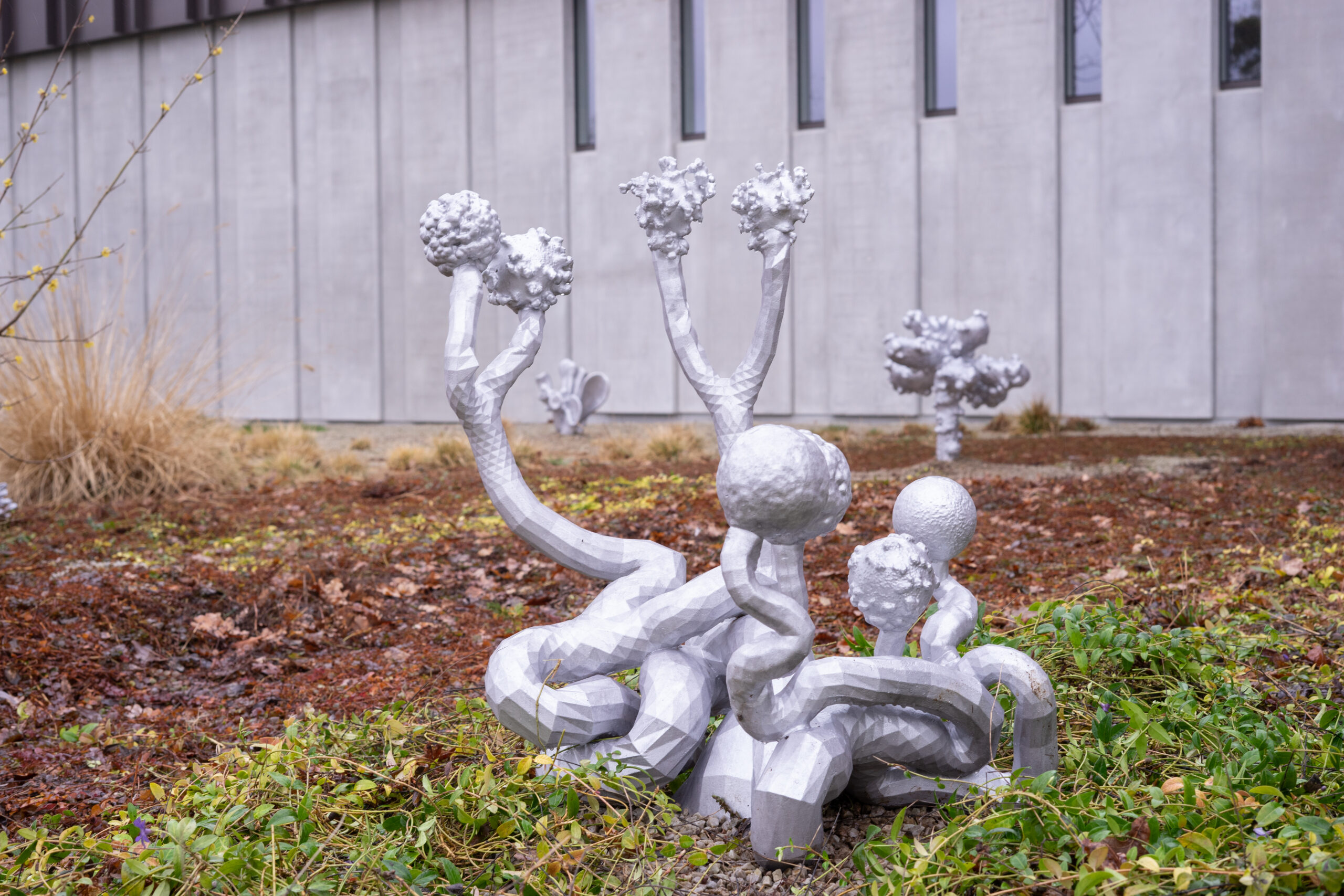
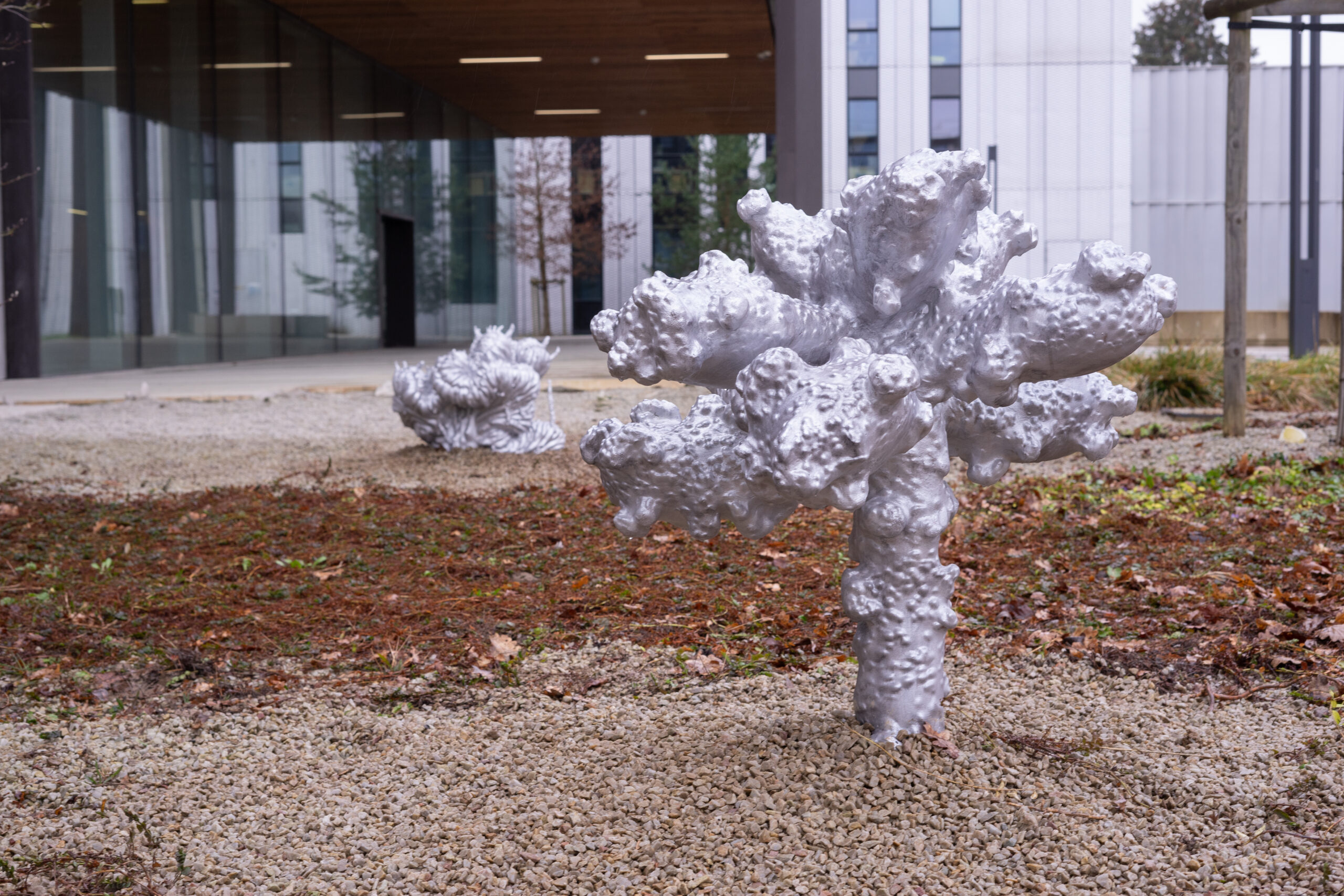
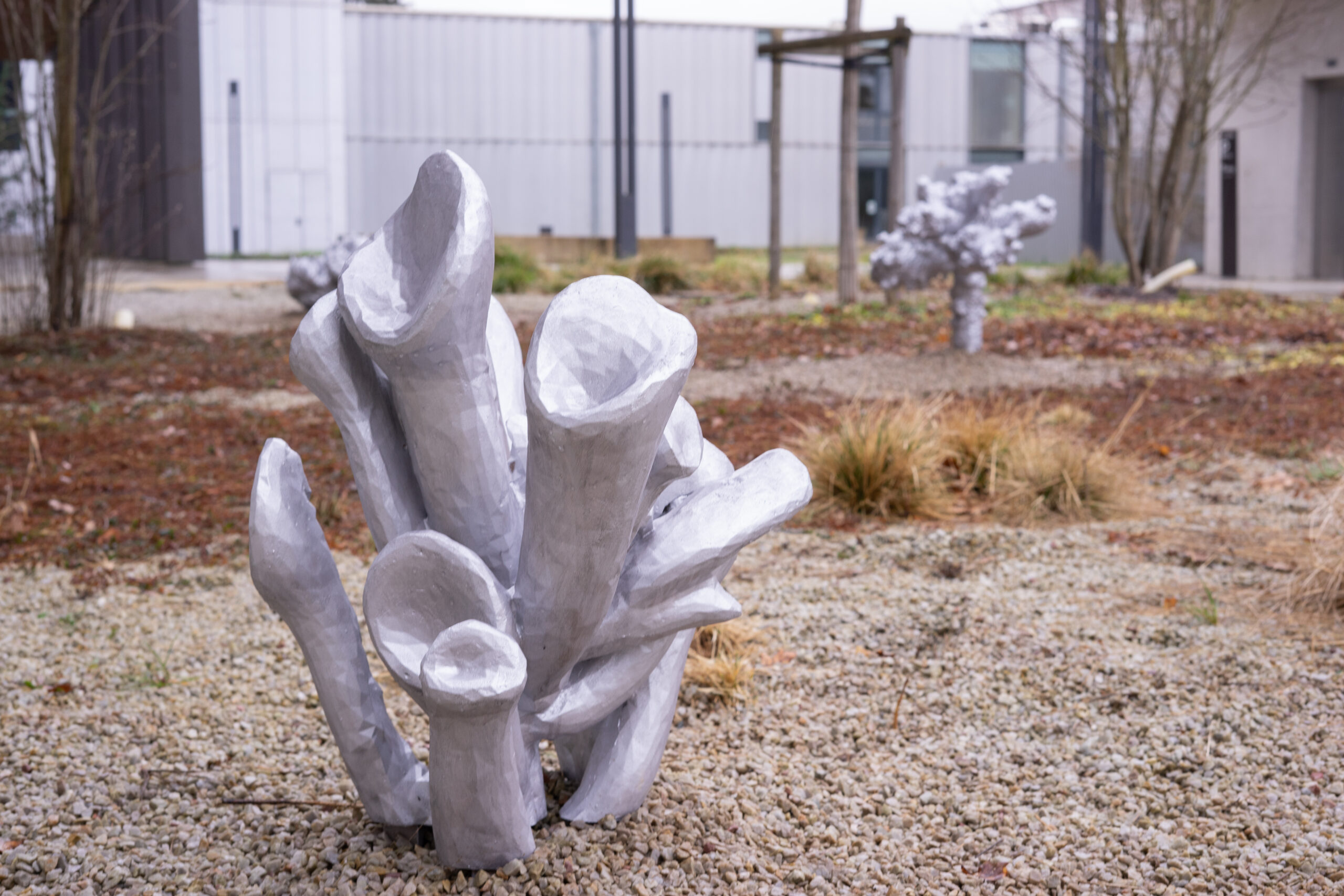
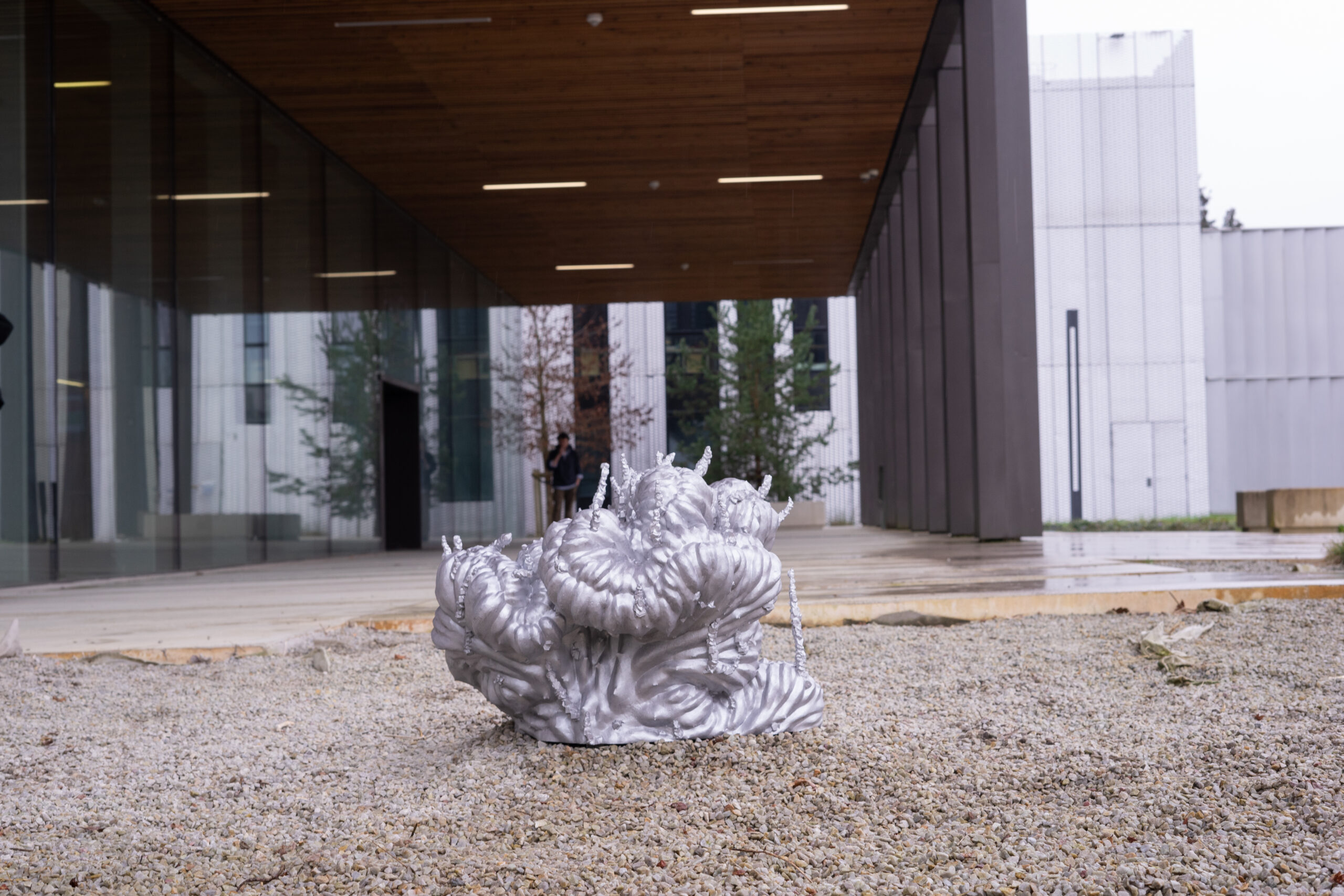
In a garden, enigmatic forms emerge at the crossroads of the botanical and the mineral, as if originating from a parallel universe. These hybrid structures are born from the imagination of algorithms and take shape in cast bronze.
This series of sculptures is part of the age-old tradition of garden art, where the arrangement of natural elements reflects the gardener’s aesthetic and cultural aspirations toward an idealized nature. Thus, the Polygonal Garden poses a question: how do flows and forces give birth to forms?
Despite their complex and chaotic contours, these metal plants hint at their internal structures through the visible polygons that compose them. At once familiar and unsettling, they were generated by procedural modeling before being translated into our physical reality.
From digital modeling to materialization in bronze, each sculpture undergoes a series of metamorphoses: 3D printing, casting via the ancestral lost-wax technique, and the subsequent smelting of the metal. This transition from the virtual to the tangible—from calculations to cast bronze—plays with shifts in scale and explores the notions of growth and transformation.
This garden is rich in paradoxes, poised between order and chaos, stillness and change. Given its material, it appears to possess great permanence, remaining almost unalterable on the scale of a human life or a physical construction. Yet, like all matter, it does not escape change: it evolves constantly under the influence of the invisible forces that shape our reality.
It embodies a space where the boundaries between everyday material reality and the worlds of the mind are porous, inviting the viewer to dive into an “elsewhere” and to dissolve the borders between the known and the unknown.